EXAMPLE SITE ARCHITECTURE

One EMS. Every energy asset.

Select an asset to see what Arctic Energy monitors and controls.


CLOUD MONITOR AND CONTROL
Polar Cloud POLAR CLOUD1 SECOND LIVE DATA
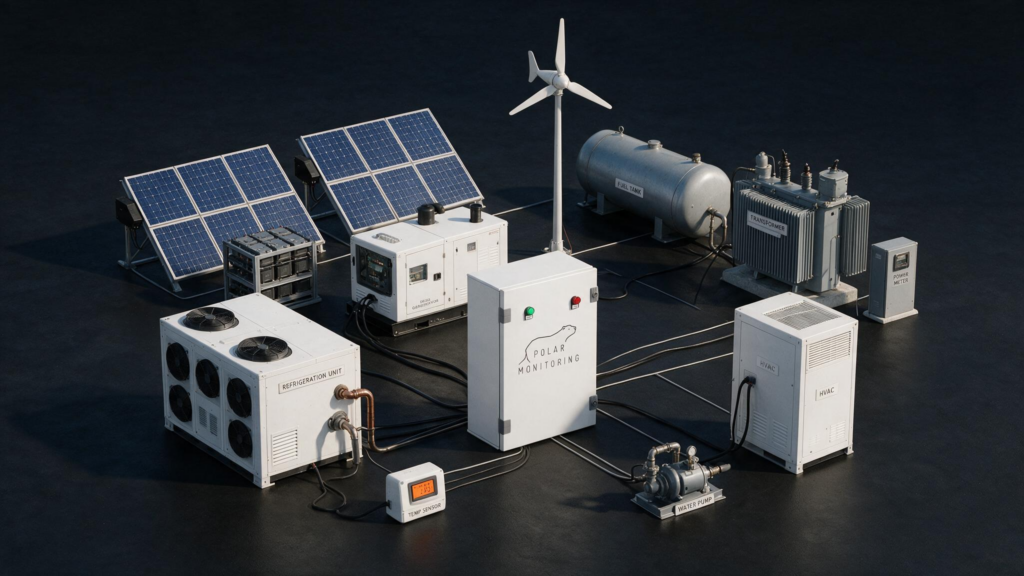
GENERATION Solar PV
742 kW 4 inverters · 98.6% available

Active power, inverter state, yield, curtailment and control setpoints.

POWER & CONTROL CLOUD TELEMETRY

ARCTIC ENERGY EMS

Limit the risk of
complex energy sites

Coordinate complex energy sites
before control becomes a commissioning problem.

Arctic Energy is a site-level Energy Management System for hybrid installations combining PV, battery storage, generators, grid connections, meters and controllable loads. It gives teams a defined control layer—from system design and equipment selection through commissioning, handover and operation.

Resolve the control architecture
before equipment is ordered

A hybrid energy system is more than a collection of connected assets. Each device introduces interfaces, operating limits, dependencies and failure conditions that must be resolved at system level.

Arctic Energy helps the project team define:

Which controller owns each operating decision

What is measured at the point of connection
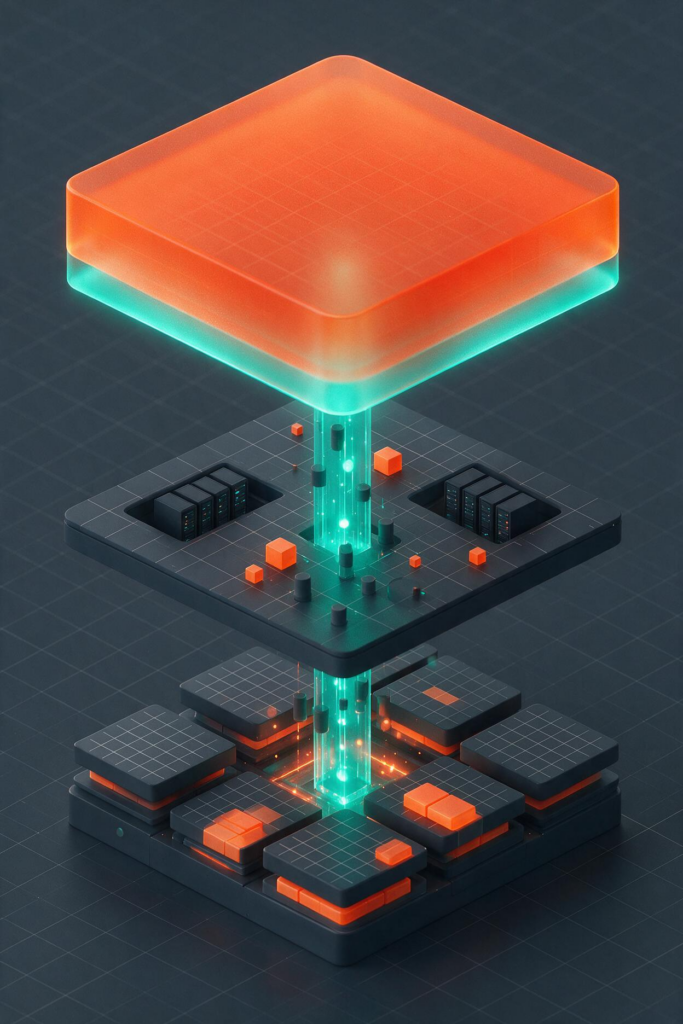
How PV, BESS, generators and loads respond together

What happens when a device, meter or communications link becomes unavailable

Which functions remain local and which are available remotely

How the system will be tested, commissioned and accepted
Bringing these decisions into the design phase reduces late interface changes, commissioning delays and unclear responsibility between suppliers.

ARCTIC ENERGY EMS

One control layer.
Clear system boundaries.

Arctic Energy reads operating conditions across the installation and applies the project’s control philosophy through an industrial on-site controller.

Essential operating logic remains at the site. Polar Cloud provides live visibility, historical trends, alarms, reports and authorised remote access without becoming the primary control layer.

The result is one coordinated operating strategy across supported equipment from different manufacturers.

ARCTIC ENERGY CONTROL LAYER

Control capabilities.

Capabilities are configured according to the selected equipment, available data points, writable controls and project requirements.

CONTROL CONFIGURATION SELECT AN OPERATING AREA PROJECT SPECIFIC
OPERATING AREA 01 / 04

Grid and point of connection control

Manage the site boundary according to approved grid, metering and export requirements.

CONTROL CLASS
GRID INTERFACE
  1. 01Zero-export operationCONFIGURABLE
  2. 02Import and export limitingCONFIGURABLE
  3. 03Active and reactive power controlCONFIGURABLE
  4. 04Power-factor controlCONFIGURABLE
  5. 05Ramp-rate managementCONFIGURABLE
  6. 06Point-of-connection meteringCONFIGURABLE
SELECTED EQUIPMENT AVAILABLE DATA POINTS WRITABLE CONTROLS PROJECT REQUIREMENTS

ARCTIC ENERGY EMS

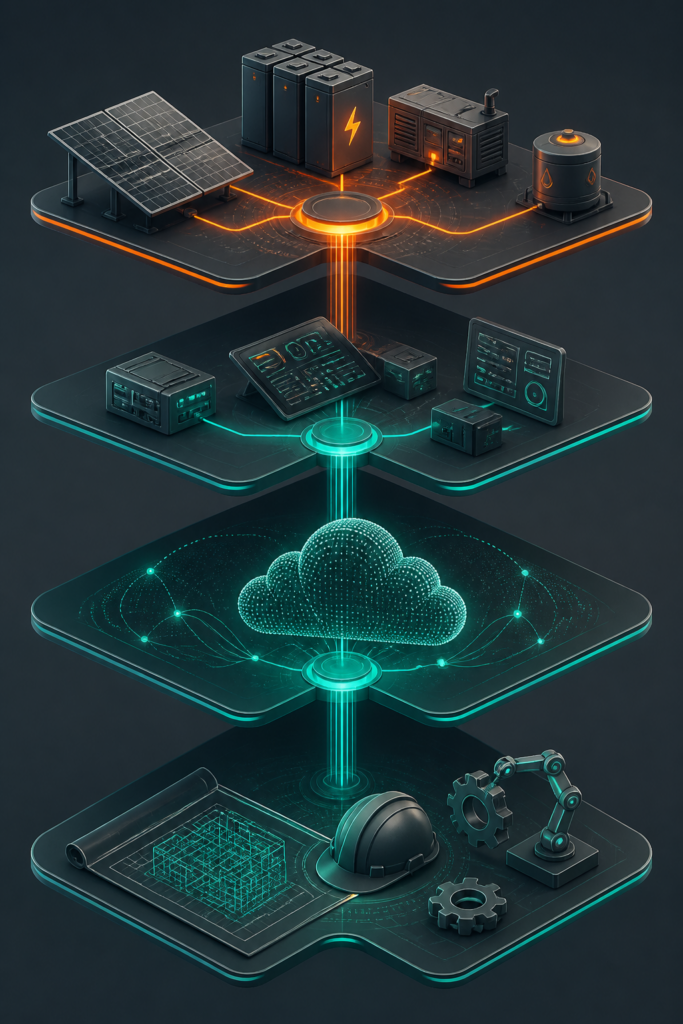
Four Connected Layers

Field integration

Supported meters, inverters, battery systems, generator controllers and other devices are connected through the required industrial communication interfaces.

Local site control

The on-site controller applies operating modes, setpoints, interlocks and defined fallback behaviour without relying on a continuous internet connection.

Polar Cloud visibility

Authorised users can view live conditions, investigate historical performance, receive alerts and access project-approved remote functions.

Engineering delivery

The solution is supported through architecture development, device mapping, configuration, testing, commissioning, training and handover.

POLAR CLOUD FOR ARCTIC ENERGY

Local control. Visibility wherever it is needed.

Polar Cloud extends Arctic Energy with live operational visibility, historical insight, alerts, reporting and authorised remote access.

CONNECTED SOLUTIONARCTIC ENERGY EMS
LIVE TELEMETRY
1 SECOND
CLOUD CAPABILITY 01 / 07

Live operational visibility

See current energy flow, equipment state and the operating condition of the managed installation.

DATA STATUS
LIVE
LIVE ENERGY FLOWNOW
PV742 kW BESS+186 kW GRID94 kW LOAD1.02 MW EMSCOORDINATED
SITE STATUSONLINEAll critical devices available
BATTERY STATE78%Charging at 186 kW
GRID CONDITION49.99 HzWithin operating limits
LAST UPDATE1 SEC AGO CONNECTED DEVICES12 / 12 ACTIVE ALARMS02 LOCAL CONTROLONLINE

How The Arctic Energy EMS Can Benefit Your Business

01

Tarrif Abritraging

By managing and using a systems battery and other alternative power generation sources, the EMS can reduce the demand from grid during peak tariffs. Couple with this it can also supplement loads to reduce peak demand

02

Research & Discovery

Optimize your building systems, equipment, and processes for maximum performance. Our EMS helps you streamline operations and improve productivity while reducing energy consumption.

03

Reduce Your Environmental Impact

Lower your carbon footprint and contribute to a more sustainable future. By reducing energy consumption, you'll decrease greenhouse gas emissions and demonstrate your commitment to environmental responsibility.

04

Gain Real-Time Insights

Access detailed energy consumption data anytime, anywhere. Our user-friendly platform provides clear visualizations and reports, giving you a complete understanding of your energy usage patterns.

05

Proactive Maintenance

Identify potential equipment issues before they become major problems. Our system can alert you to anomalies in energy consumption, allowing you to address maintenance needs proactively and prevent costly downtime.

06

Compliance and Reporting

Easily track your energy performance against targets and generate reports for regulatory compliance or internal stakeholder communication.

Technical FAQ

Is Arctic Energy different from a monitoring platform?

Yes. Monitoring explains what is happening. Arctic Energy also applies local logic and setpoints to coordinate supported energy assets. Polar Cloud provides the visibility and remote-access layer.

Yes, where the required protocol, data mapping and writable control points are available and have been validated.

Essential control remains on the local controller. Cloud visibility and remote functions may be interrupted until connectivity returns. The required offline and fallback behaviour is defined for the project.

Not automatically. It can provide local control, dashboards, trends, alarms and remote access, but the required boundary between Arctic Energy, SCADA, protection systems and equipment-level controllers must be agreed during design.

A single-line diagram, equipment schedule, preliminary control philosophy, proposed communication interfaces, operating modes and the current project stage provide a useful starting point.

ARCTIC ENERGY EMS

Planning a complex hybrid energy system?

Let’s define how your PV, BESS, generators, grid connection and loads should operate as one coordinated system.

Polar Monitoring